
“Six-seven” — not “sixty-seven.” A shout, a shrug, a vibe. The number that became a feeling.
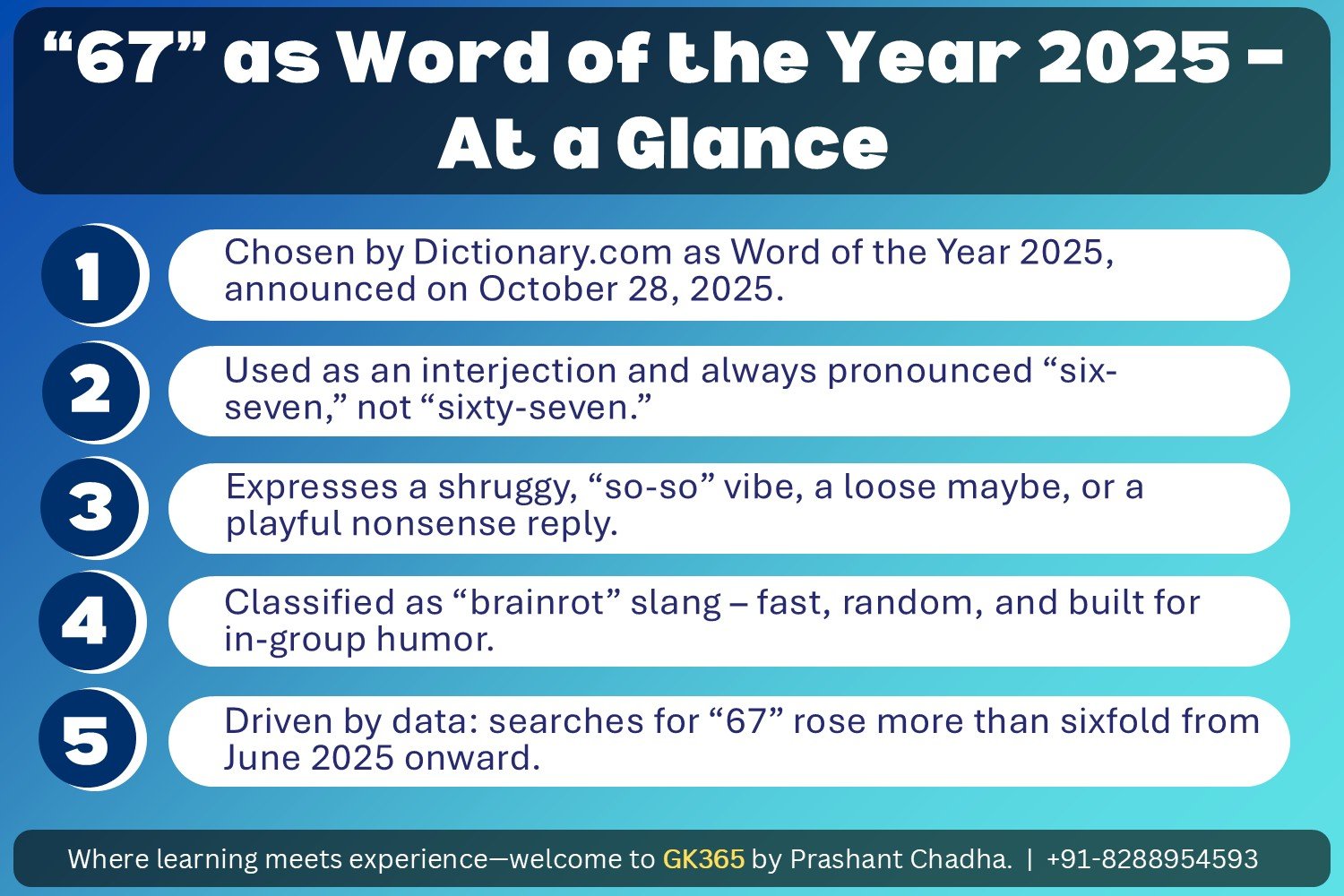
In late October 2025, Dictionary.com announced “67” as its Word of the Year. The decision startled many adults and delighted a generation of children. This marks the first time in Word-of-the-Year history that a number has been selected — treating “67” not as a count, but as an interjection that behaves like “ugh,” “meh,” or “yo.”
The term rose from drill music, basketball highlights, and viral TikTok clips to become a hallway chant in schools worldwide. Dictionary.com describes it as a “linguistic time capsule” — capturing a year when a number acted like a mood and teens redefined what counts as a word.
🎵 Origins: From Drill Track to Viral Phenomenon
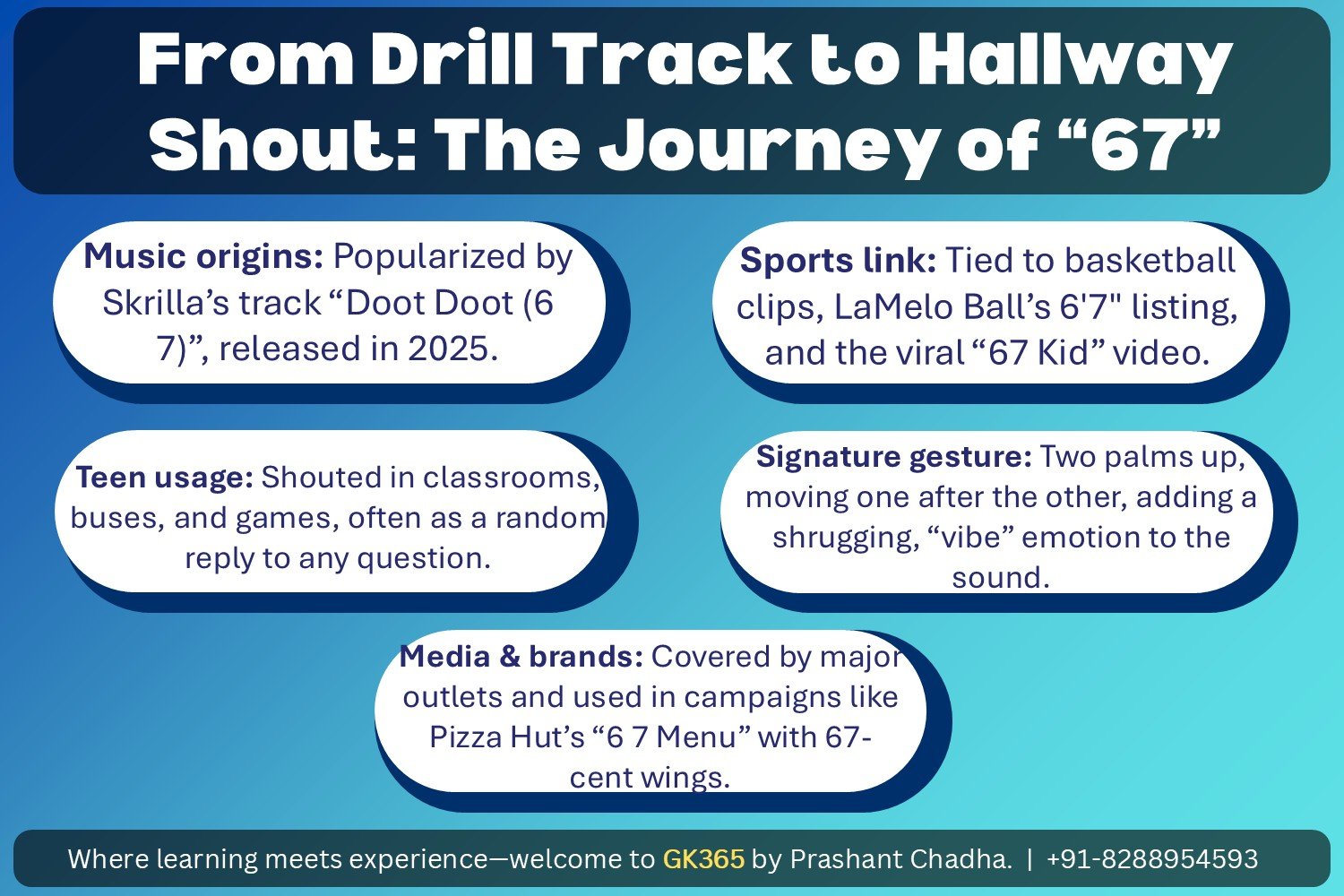
The slang traces a clear path. The track “Doot Doot (6 7)” by Skrilla, released with Priority Records in September 2025, repeats the phrase in its chorus and fed early remixes. Basketball clips then linked the sound to height jokes and highlight edits.
LaMelo Ball, the NBA player listed at 6 feet 7 inches, strengthened the basketball connection. A youth basketball video spread widely and turned one young player into the “67 Kid.” The Dictionary.com slang entry dates to September 15, 2025, after months of organic growth.
Think of “67” like a catchy hook that escaped from a song and became everyone’s favorite reply. A musician made a beat, kids started saying it ironically, sports clips spread it, and suddenly an entire generation was shouting two syllables that meant everything and nothing at once.
🗣️ How Teens Use “67” in Daily Talk
What does “67” mean when a kid shouts it across a bus aisle? The Dictionary.com entry lists several uses. Many speakers use it for “so-so” or for a vague maybe. Others treat it as a stock reply to almost any prompt. The humor comes from tripping up an adult question — the joke lands when the answer makes no sense yet still sounds right.
Gesture shapes the message. The most common motion shows both palms up, moving one after the other. This sign adds a shrugging tone that lets the sound act like an emotion. That physical detail made the trend quick to copy in clips and at games — and simple to spot in daily life.
The word works precisely because it carries no fixed meaning. Kids use it to mark belonging and timing — the sound holds a wink that plain text cannot match. For users who share it, that social signal counts as meaning.
| Usage Context | What It Means | Example |
|---|---|---|
| Response to question | “So-so” or vague maybe | “How was your test?” — “67” |
| Random interjection | Pure joke, no meaning | Shouting “67!” in hallways |
| With gesture | Shrug-like emotion | Palms up, weighing motion |
| In-group bonding | Marks belonging | Chanting at games or events |
🧠 Brainrot Slang: The Logic of Nonsense
Dictionary.com classifies “67” under “brainrot” slang. Brainrot terms prize randomness, speed, and in-group play. The fun rests on absurd tone rather than stable sense. The term joins other 2025 internet phenomena that spread through irony and repetition.
Does nonsense push aside meaning? Here the nonsense carries a social role. The number works like a sigh, a smirk, or a light shove of the shoulder. For the users who share it, that social function is real language work — even if no one writes it in a formal essay.
Pronunciation matters: Always say “six-seven,” NEVER “sixty-seven.” The slang version requires the two-syllable punch. Saying “sixty-seven” marks you as an outsider who does not understand the meme.
📈 What Dictionary.com Saw in the Data
The selection rests on scale and speed. Dictionary.com tracks headlines, social trends, search results, and site traffic. The clearest claim: interest in “67” grew more than sixfold from June 2025 onward. That curve set “67” apart from other two-digit numbers.
The site notes reports from teachers who faced classroom chants of the term. The slang entry adds further context — sports tie-ins with the Overtime Elite league and even a cameo from Shaquille O’Neal in a video. The term moved from TikTok edits to NBA and NFL references, reaching new audiences rapidly.
Key Data Point: Searches for “67” increased MORE THAN 6× (sixfold) from June 2025 onward — this outpaced all other two-digit numbers and became the primary evidence for the Word of the Year selection.
🌍 Why This Matters: A First in Linguistic History
Dictionary.com presents this pick as a break with past Word of the Year choices. The site describes “67” as an interjection rather than a classic word — it behaves like “ugh,” “meh,” or “yo,” yet remains a number. That pairing is unprecedented for a Word of the Year feature.
The 2025 shortlist placed “67” beside culture terms like “agentic” (relating to AI agents), “overtourism”, and “tradwife”. Public reaction ran hot — some praised the playfulness while others mocked the idea that a number can function as a word. The debate itself highlights how language evolves through social use.
The selection raises deeper questions about language in the digital age. Kids now treat numbers, emojis, and sounds as building blocks for emotion. “67” shows that a number can act as a word once users share the same cue and timing — challenging traditional definitions of what counts as “language.”
🍕 Pop Culture Spillover & Brand Responses
Memes often move into marketing, and “67” did that quickly. Pizza Hut ran a two-day “6 7 Menu” offer from November 6-7, 2025, featuring 67-cent boneless wings and a “SIXSEVEN” promotional code. This shows how brands track youth slang once it reaches major outlets.
Press coverage in India, the UK, and globally added new reach. These stories carried the meme to fresh readers and gave parents a clear explanation. The arc supports Dictionary.com’s claim about the speed of modern spread — a US slang item can turn into a worldwide headline within days.
Click to flip • Master key facts
For GDPI, Essay Writing & Critical Analysis
5 questions • Instant feedback
67 was announced as Dictionary.com Word of the Year on October 28, 2025 — the first time a number has received this distinction.
The correct pronunciation is six-seven (two syllables), never sixty-seven (three syllables). This pronunciation rule is essential to the slang usage.
Searches for 67 increased more than sixfold (6×) from June 2025 onward, which outpaced all other two-digit numbers.
Dictionary.com classifies 67 as brainrot slang — terms that prize randomness, speed, and in-group play over fixed meaning.
The song Doot Doot (6 7) by Skrilla, released with Priority Records in September 2025, popularized the phrase through its catchy chorus.








