
“Medicine should serve human freedom, not restrict it.” — Étienne-Émile Baulieu on reproductive rights
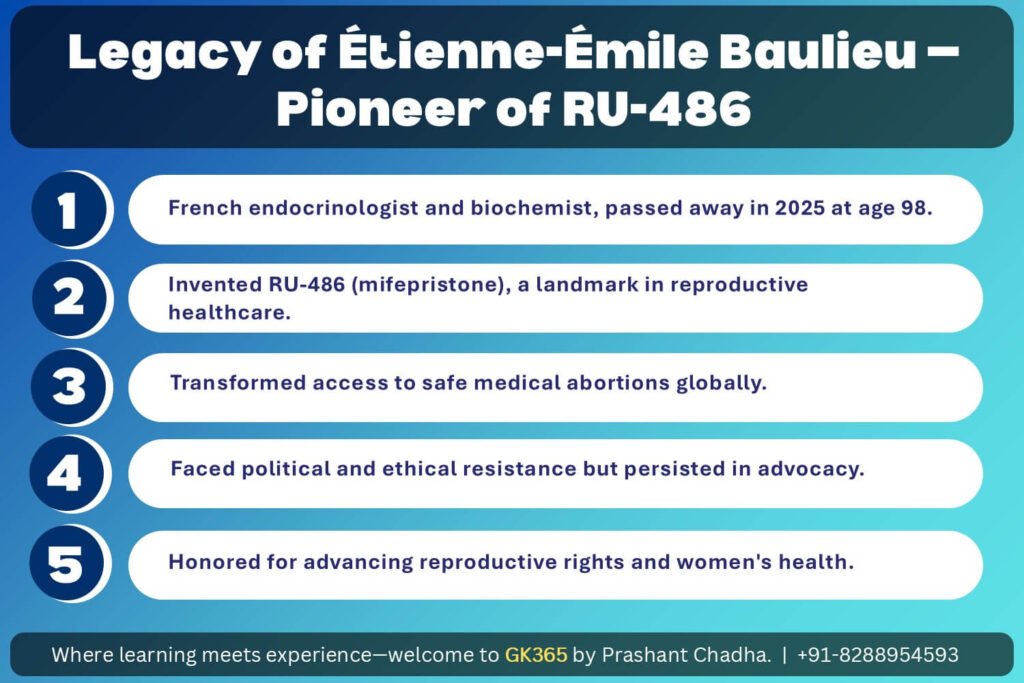
Étienne-Émile Baulieu, the French biochemist who created the abortion pill RU-486 (mifepristone), died on May 31, 2025. He was 98. Known for his groundbreaking research on steroid hormones, Baulieu also worked extensively on aging and brain diseases. His invention changed abortion access worldwide and shaped debates in science, law, and medicine for decades.
Baulieu was more than a scientist. His work connected biology to personal freedom and public health, making him one of the most influential figures in reproductive medicine.
👤 Who Was Étienne-Émile Baulieu?
Born in Strasbourg, France, in 1926 as Étienne Blum, he changed his name during his time in the French Resistance during World War II. He earned a medical degree in 1955 and a Ph.D. in biochemistry in 1963. He joined the French Communist Party in his youth but left it after the Soviet invasion of Hungary in 1956—a decision that reflected his intellectual independence.
Baulieu rose to national and international scientific leadership and became one of France’s most respected researchers. His career spanned decades of work on steroid hormones, reproductive health, and later, brain diseases and aging.
Think of Baulieu as someone who used science to expand human choice. Just as vaccines prevent diseases, his abortion pill gave people a safe, non-surgical option to end early pregnancies—transforming reproductive healthcare from a surgical procedure to a medical one.
💊 Invention of RU-486 (Mifepristone)
In the early 1980s, Baulieu worked with pharmaceutical company Roussel-Uclaf to develop RU-486. The drug, later called mifepristone, blocks progesterone—a hormone required to maintain pregnancy. It allows early abortions without surgery when used with misoprostol.
Baulieu described RU-486 as a “contragestive,” focusing on how it worked rather than on political labels. The drug gave millions of people a safe and simple option for ending early pregnancies.
Key Mechanism: RU-486 (mifepristone) works by blocking progesterone receptors, preventing the hormone from maintaining the uterine lining necessary for pregnancy continuation.
| Milestone | Year | Significance |
|---|---|---|
| Development begins | Early 1980s | Collaboration with Roussel-Uclaf |
| France approval | 1988 | First country to approve after political pushback |
| US FDA approval | 2000 | Expanded access in world’s largest healthcare market |
| Majority usage | By 2020 | Over 50% of US abortions use mifepristone |
🌍 Impact on Global Reproductive Rights
Baulieu’s invention reached far beyond medicine. It fueled debates over ethics, religion, and autonomy. Despite intense criticism from religious groups and conservative leaders, Baulieu remained clear in his support of reproductive choice.
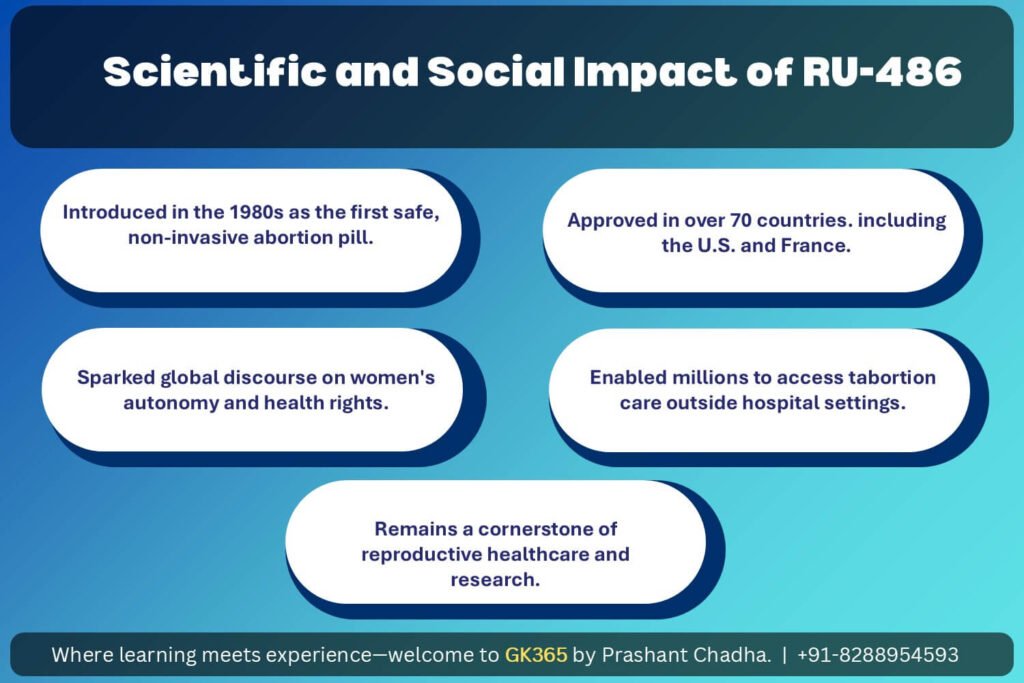
His stance helped normalize discussions about abortion and pushed many governments to treat reproductive health as a human right. The drug is now approved in over 60 countries and has been used safely by millions worldwide.
RU-486 shifted abortion from a surgical procedure requiring hospital visits to a medical option available in clinics and pharmacies. How does this technological change affect debates about reproductive access, especially in regions with limited healthcare infrastructure?
🔬 Scientific Contributions Beyond RU-486
Baulieu’s career extended well beyond his famous invention. His research on steroid hormones laid groundwork for understanding human development and aging.
Key Research Areas:
- DHEA (Dehydroepiandrosterone): Studied this hormone’s role in aging and potential anti-aging properties
- Estrogen & Progesterone: Explored how these hormones affect fertility, puberty, and mental health
- Neurosteroids: Pioneered research on how the brain produces its own steroids
- Brain Health: Later work focused on progesterone’s role in protecting the brain from diseases
Don’t confuse: Mifepristone (RU-486) with emergency contraception (morning-after pill). Mifepristone terminates an existing pregnancy by blocking progesterone, while emergency contraception prevents pregnancy from occurring. They work at different stages and have different mechanisms.
📣 Public Advocacy & Societal Influence
Baulieu spoke out clearly and often. He defended mifepristone’s scientific value, even in the face of intense opposition. He explained its use in public forums and helped frame it as a medical tool, not a moral issue.
He demonstrated that a scientist can also be a public voice—combining facts with principles and public trust. His advocacy influenced policy debates across continents and inspired generations of researchers to engage with social implications of their work.
🏅 Honors, Awards, and Global Recognition
Baulieu’s work earned widespread praise and numerous prestigious positions:
Leadership Positions:
- President of the French Academy of Sciences
- Member of the U.S. National Academy of Sciences
- Founder of Institut Baulieu (focusing on aging and Alzheimer’s research)
Major Awards:
- Légion d’honneur — France’s highest civilian honor
- UNESCO Gold Medal for Science
- Numerous honorary degrees from universities worldwide
🧭 Legacy and Global Significance
Baulieu’s impact spans multiple dimensions of science and society:
- Reproductive Medicine: Redefined how abortions are performed globally
- Hormone Science: Expanded understanding of steroid hormones and their functions
- Brain Research: Opened new avenues for studying neurosteroids and brain protection
- Science-Society Interface: Demonstrated how scientists can engage in public debates
Debates over RU-486 continue in courts and legislatures worldwide. His work remains at the center of ongoing discussions about reproductive rights, medical ethics, and scientific freedom.
Baulieu’s career illustrates the intersection of science, ethics, and politics. His work raises questions about the role of scientists in public advocacy, the relationship between medical innovation and social change, and how societies balance individual rights with collective values.
Click to flip • Master key facts
For GDPI, Essay Writing & Critical Analysis
5 questions • Instant feedback
Étienne-Émile Baulieu died on May 31, 2025, at the age of 98.
RU-486 blocks progesterone, a hormone required to maintain pregnancy. This causes the uterine lining to break down.
France was the first country to approve RU-486 in 1988, after initial political resistance.
By 2020, over 50% of all abortions in the United States used mifepristone (medication abortion).
Baulieu served as President of the French Academy of Sciences, one of the most prestigious scientific positions in France.








