
“Population is not about numbers alone — it is about empowering young people to build the futures they deserve.” — UNFPA, 2025
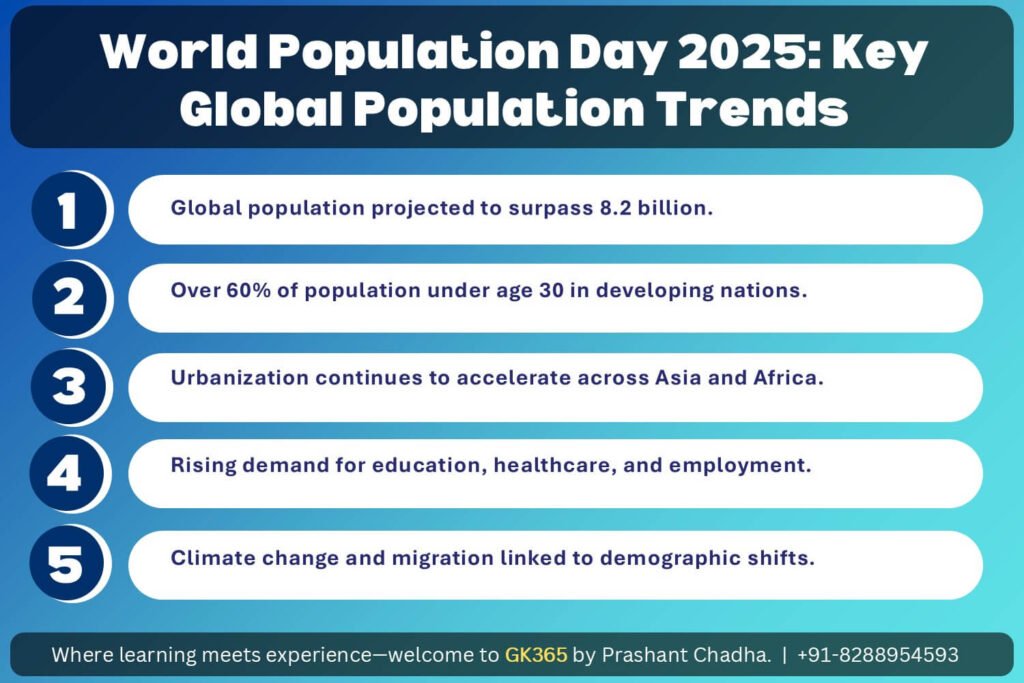
World Population Day is observed every year on July 11. It draws global attention to how population changes affect development, rights, and the environment. In 2025, with the world population crossing 8.1 billion and India now the most populous country, the focus shifts to youth empowerment, reproductive choice, and sustainable futures.
The day originated from “Five Billion Day” on July 11, 1987, when the global population hit 5 billion. It was officially established in 1989 by the United Nations Development Programme (UNDP). Since then, it has served as a platform to address the demands of a growing population and push for health rights, gender equality, and sustainable growth.
📜 Historical Background and Origins
The observance of World Population Day traces back to a significant demographic milestone. On July 11, 1987, the world population reached 5 billion people — an event marked as “Five Billion Day.” This milestone sparked global conversations about population growth, resource management, and sustainable development.
Two years later, in 1989, the United Nations Development Programme (UNDP) officially established World Population Day. The governing council recommended that July 11 be observed annually to raise awareness about population issues and their impact on development and the environment.
Over the decades, the day has evolved to address contemporary challenges including reproductive health rights, gender equality, urbanization, and the intersection of population dynamics with climate change.
Think of World Population Day like an annual check-up for humanity. Just as you visit a doctor to assess your health, July 11 is when the world pauses to examine how population changes affect everything from jobs and housing to healthcare and the environment.
🏷️ Theme of World Population Day 2025
The theme for World Population Day 2025 is:
“Empowering young people to create the families they want in a fair and hopeful world.”
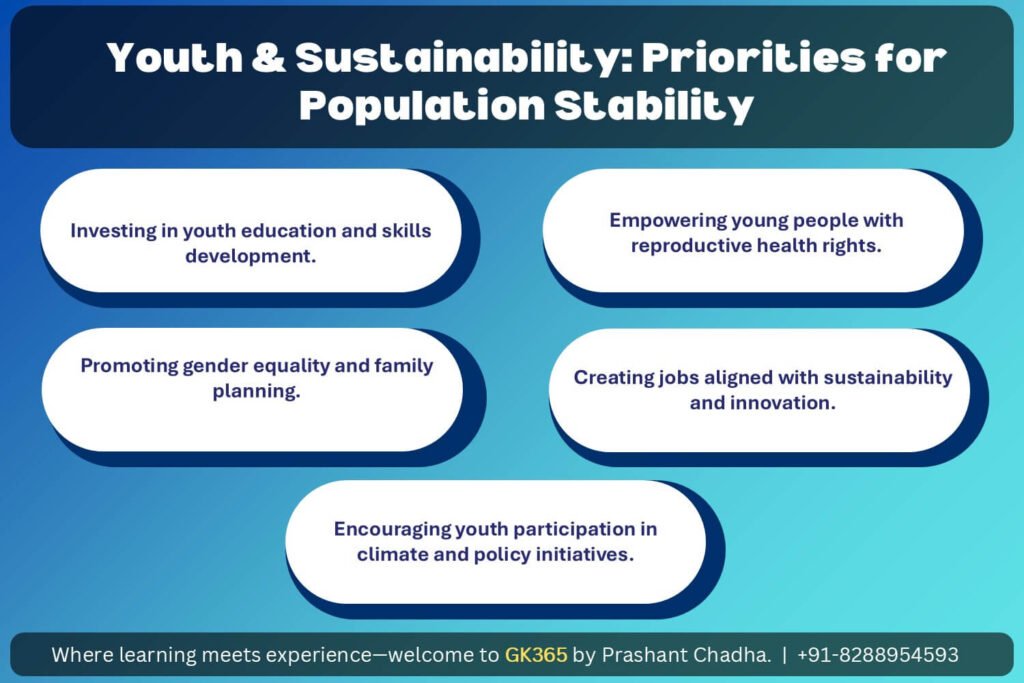
This theme centers on the world’s largest-ever youth generation. It emphasizes their right to make informed choices about family planning and access key services including education, healthcare, and employment opportunities.
The 2025 theme directly supports the following Sustainable Development Goals (SDGs):
- SDG 3: Good Health and Well-being
- SDG 5: Gender Equality
- SDG 11: Sustainable Cities and Communities
Theme 2025: “Empowering young people to create the families they want in a fair and hopeful world” — Focus on youth empowerment and reproductive rights. Remember: Youth + Choice + Fairness
🌍 Global Population Trends: 2025 and Beyond
In 2025, the world population reaches over 8.1 billion. Demographic shifts continue to shape economic, social, and environmental realities across the globe.
Key Population Milestones:
- 1800s: 1 billion
- 2011: 7 billion
- 2025: 8.1 billion
- 2030 (projected): 8.5 billion
- 2050 (projected): 9.7 billion
Urbanization Trends: Since 2007, more people have lived in cities than rural areas. By 2050, two-thirds of the world population will live in urban zones. This rapid urbanization affects housing supply, public transport, sanitation, healthcare access, and environmental sustainability.
It took thousands of years for humanity to reach 1 billion people (around 1800), but only 200 years to add another 7 billion. This exponential growth pattern raises critical questions about resource sustainability and quality of life for future generations.
🇮🇳 India Surpasses China: Demographic Implications
In 2025, India officially becomes the world’s most populous nation, surpassing China for the first time in modern history.
- 🇮🇳 India: 1.46 billion (1,463,865,525)
- 🇨🇳 China: 1.41 billion (1,416,096,094)
This demographic shift places India at the center of global discussions around youth employment, urban policy, and social services. Nearly half of India’s population is under 25 years old, presenting both opportunities and challenges.
Key priorities for India include:
- Expanding access to quality education and skill training
- Improving urban infrastructure to accommodate rapid growth
- Ensuring reproductive rights and healthcare access
- Creating employment opportunities for the youth bulge
| Parameter | 🇮🇳 India (2025) | 🇨🇳 China (2025) |
|---|---|---|
| Population | 1.46 billion | 1.41 billion |
| Youth Share (Under 25) | ~50% | ~25% |
| Growth Trend | Growing (slowing) | Declining |
| Median Age | ~28 years | ~39 years |
| Demographic Dividend | Active phase | Ending phase |
Don’t confuse: India became the most populous country in 2023 (according to UN estimates), but 2025 data confirms the lead with 1.46 billion vs China’s 1.41 billion. Also remember: Having a larger population is not automatically an advantage — it depends on how the “demographic dividend” is harnessed through education and employment.
📊 Top 10 Most Populous Countries in 2025
The following table shows the top 10 most populous countries in 2025:
| Rank | Country | Population (2025) |
|---|---|---|
| 1 | 🇮🇳 India | 1,463,865,525 |
| 2 | 🇨🇳 China | 1,416,096,094 |
| 3 | 🇺🇸 United States | 347,275,807 |
| 4 | 🇮🇩 Indonesia | 285,721,236 |
| 5 | 🇵🇰 Pakistan | 255,219,554 |
| 6 | 🇳🇬 Nigeria | 237,527,782 |
| 7 | 🇧🇷 Brazil | 212,812,405 |
| 8 | 🇧🇩 Bangladesh | 175,686,899 |
| 9 | 🇷🇺 Russia | 143,997,393 |
| 10 | 🇪🇹 Ethiopia | 135,472,051 |
Top 5 Memory Trick: “ICIUS” — India, China, Indonesia, USA (note: USA is 3rd), Indonesia, Pakistan. Remember: 4 of top 5 are Asian countries!
🏙️ Population Density: Most Crowded Places
Population density measures how many people live per square kilometer. Dense populations add stress to infrastructure and public services.
Top 5 Most Densely Populated Territories (2025):
- Macau: 21,946 people/km²
- Monaco: 19,171 people/km²
- Singapore: 8,177 people/km²
- Hong Kong: 7,044 people/km²
- Gibraltar: 5,901 people/km²
Small nations and territories with limited land area must manage population pressure through smart urban planning, vertical housing, and efficient resource management.
🇮🇳 Population in Indian States: 2025 Snapshot
Top 5 Most Populous Indian States (2025):
- Uttar Pradesh: 241 million
- Maharashtra: 124 million (est.)
- Bihar: 120 million (est.)
- West Bengal: 100 million (est.)
- Madhya Pradesh: 90 million (est.)
Least Populous State: Sikkim — approximately 703,000
Uttar Pradesh alone has a population larger than most countries in the world — if it were a country, it would rank 5th globally!
👥 Challenges Facing Youth in 2025
While overall population growth is slowing in some regions, young people still face significant challenges that require urgent attention.
Core Issues Affecting Youth:
- 🏚️ Job Insecurity: High unemployment and slow wage growth
- 🏥 Healthcare Gaps: Limited access to healthcare and contraceptives
- 🌍 Climate Anxiety: Growing concerns about environmental future
- 🎓 Education Inequality: Unequal access to education and technology
- ⚠️ Instability: Conflict, migration, and economic uncertainty
According to UNFPA, one in five adults worldwide cannot plan their families as they would like, often due to external constraints rather than personal choice.
The “demographic dividend” is only beneficial if young people have access to quality education, healthcare, and employment. Without these investments, a youth bulge can become a “demographic burden” leading to social unrest and economic stagnation.
✨ Why World Population Day 2025 Matters
World Population Day serves multiple important purposes in 2025:
- Awareness: Spotlights the link between population growth and sustainability
- Youth Empowerment: Supports young people with tools, knowledge, and rights
- Gender Equality: Pushes for fairness in family planning decisions
- Urban Planning: Encourages cities to prepare for demographic shifts and ageing populations
- SDG Progress: Maintains global focus on health, equality, and inclusive development
In the Indian context, the day is particularly significant as the country navigates its new position as the world’s most populous nation while working to harness its demographic dividend.
Click to flip • Master key facts
For GDPI, Essay Writing & Critical Analysis
5 questions • Instant feedback
World Population Day is observed on July 11 every year, commemorating “Five Billion Day” in 1987.
World Population Day was established by the United Nations Development Programme (UNDP) in 1989.
India became the most populous country in 2025 with approximately 1.46 billion people, surpassing China.
The 2025 theme focuses on empowering young people to create the families they want in a fair and hopeful world.
Uttar Pradesh is the most populous Indian state with approximately 241 million people in 2025.








