
“Joy grows through action, shared effort, and the feeling of surviving and celebrating together.” — On Mumbai’s unique happiness
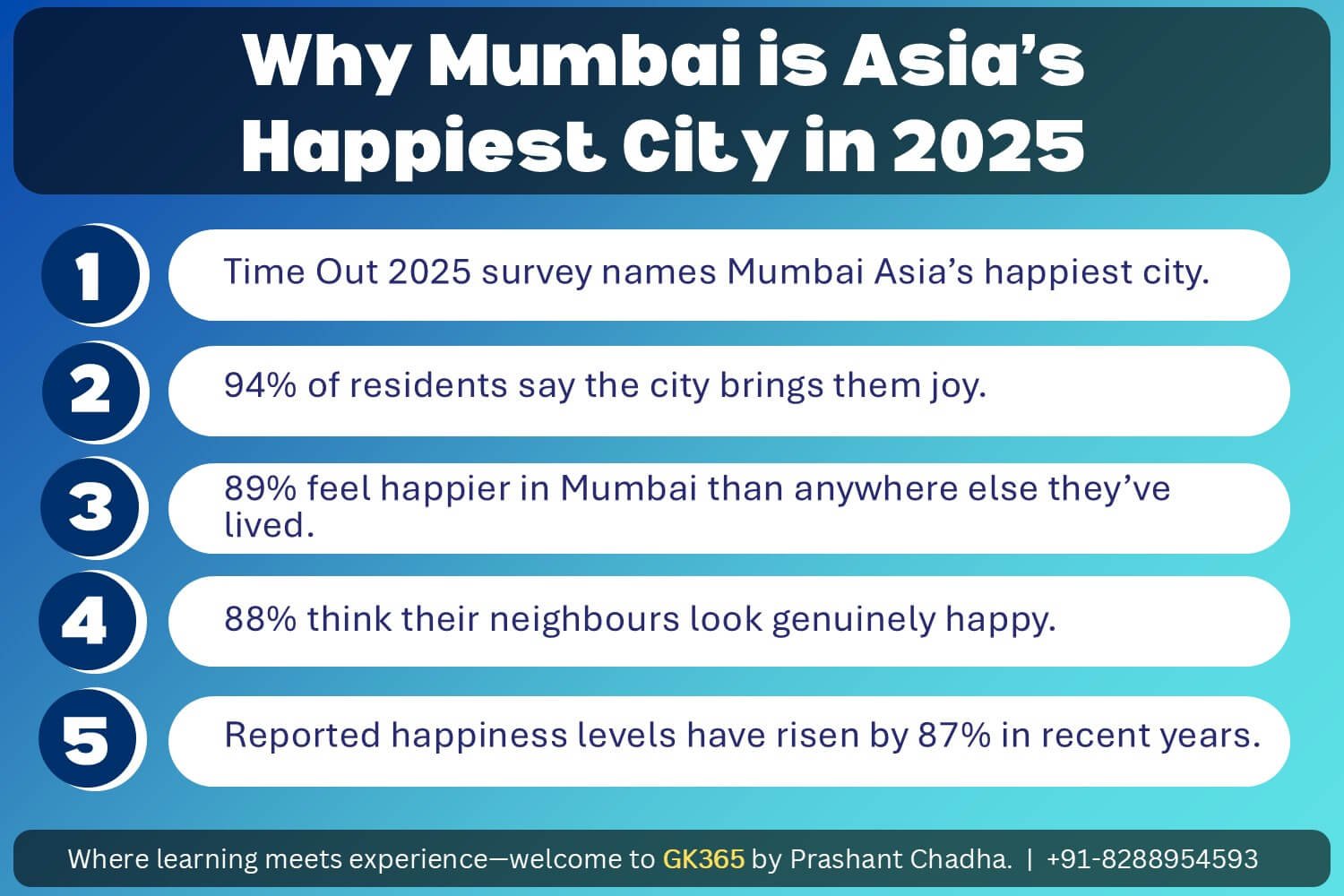
In 2025, Time Out named Mumbai the happiest city in Asia — a result that surprised many who associate the city with crowds, long commutes, and urban chaos. The survey looked beyond roads and income to measure how residents actually feel in daily life. Across culture, community ties, nightlife, and lifestyle, Mumbai scored ahead of every other major Asian city.
The findings challenge conventional ideas about what makes a city liveable. Mumbai’s happiness does not come from quiet comfort or perfect order — it rises from shared life, constant motion, and a collective spirit that turns chaos into celebration.
📋 The Survey and Its Method
Time Out gathered responses from about 18,000 residents across major Asian cities. Participants rated food, culture, social life, and their sense of belonging. The questions focused on emotion and routine experience — how often people smiled, went out, or met friends for meals.
Material comfort and infrastructure did not sit at the centre of this survey. Mumbai’s top position came from emotional answers rather than pay levels or city layout. The findings suggest that lived experience shapes happiness more than wealth alone.
Think of this survey like asking people “How do you feel when you wake up in your city?” rather than “How much do you earn?” or “How good are your roads?” Mumbai won because its residents reported genuine joy in daily life — eating street food, catching local trains, celebrating festivals with neighbours.
📈 Mumbai’s Triumph: Numbers That Tell a Story
The headline numbers explain why Mumbai ranked first among all Asian cities surveyed:
- 94 percent of residents say the city brings them joy
- 89 percent feel happier in Mumbai than in any other place they have lived
- 88 percent think their neighbours appear genuinely happy
- Reported happiness levels have risen by 87 percent in recent years
These figures describe strong emotional satisfaction inside a fast, crowded city. Many residents read pressure and pace as part of a lively life, not a burden.
Key Numbers: 94-89-88-87 — Joy rate (94%), happier than elsewhere (89%), happy neighbours (88%), happiness growth (87%). Remember: “Mumbai’s happiness starts at 94 and stays in the high 80s.”
🎭 The City’s Cultural and Emotional Core
Mumbai runs on constant movement and variety. Art galleries, theatres, cricket grounds, and film sets all share the same map. Residents rarely describe the city as calm — they speak about energy, activity, and a sense of purpose that comes from motion.
Many languages and faiths sit side by side. People carry different food habits and customs into shared streets and trains. This mix builds curiosity and tolerance, creating a shared emotional culture in which joy feels like a joint project.
🤝 Sense of Community and Belonging
The survey numbers on community stand out. Nearly nine in ten respondents see real happiness among neighbours. Connection often starts in small places — shared taxis, markets, and building courtyards.
Local trains play a clear part. They are crowded, yet they pull strangers into close contact. People talk, pass snacks, and offer help during delays or heavy rain. Housing societies and residential colonies extend the same spirit through festivals and street gatherings.
Mumbai’s local trains carry over 7.5 million passengers daily — making them among the world’s busiest rail systems. Yet instead of breeding isolation, this crushing proximity seems to foster community. Could forced closeness actually build social bonds that spacious, car-dependent cities lack?
🎬 The Role of Bollywood and Entertainment
Bollywood shapes how Mumbai thinks about hope and joy. For many locals, cinema acts as work, dream, and identity at the same time. The film and entertainment sector provides jobs and daily excitement.
Billboards, film shoots, and studios remind residents that stories are being made nearby. When people watch tales of love, struggle, and success on screen, they often carry that mood into daily life. This ongoing stream of stories feeds optimism, even when the city faces floods or traffic jams.
🍽️ Street Food: The Taste of Everyday Joy
Time Out’s report highlights food as a core pillar of happiness. Mumbai’s street food scene cuts across income groups — office workers, students, and shop staff stand at the same vada pav stalls.
Evening walks along Marine Drive or Juhu Beach often include snacks and chats. People meet to watch the sunset, breathe sea air, and eat together. Simple dishes turn into rituals that close a long day on a warm note.
Vada pav, bhel puri, and pav bhaji do more than fill hunger. They carry nostalgia, comfort, and a strong sense of local identity. Flavour and memory blend and keep residents tied to the city’s pulse.
| Street Food | Origin | Cultural Role |
|---|---|---|
| Vada Pav | Mumbai (1960s) | Working-class icon, called “Mumbai’s burger” |
| Bhel Puri | Chowpatty Beach | Beach evening ritual, family bonding |
| Pav Bhaji | Textile mill workers | Quick meal that became cultural symbol |
| Cutting Chai | Irani cafes | Social connector, conversation starter |
🌟 Why Happiness Feels Different in Mumbai
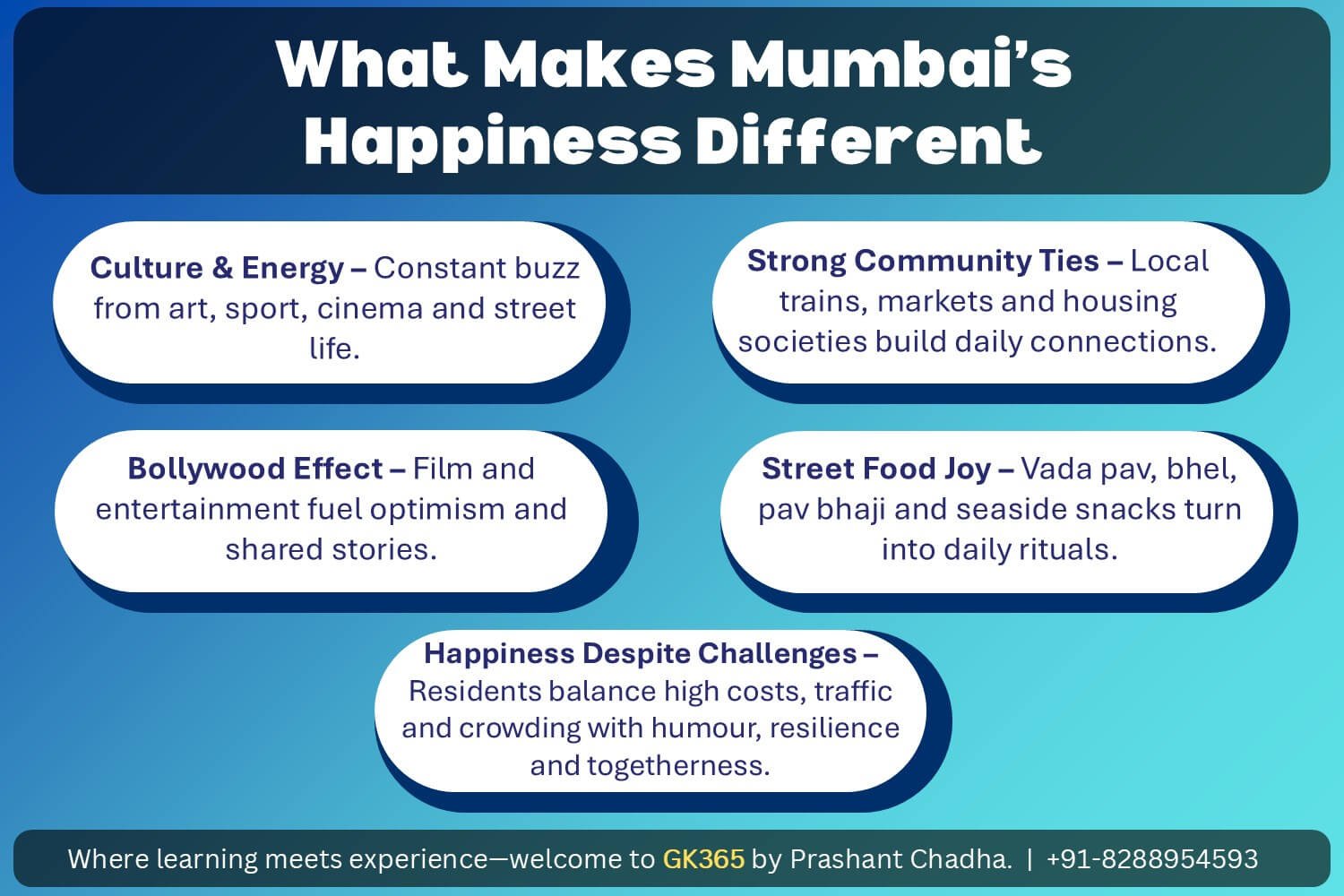
Many global cities may look cleaner or more ordered on paper. Mumbai offers a different kind of appeal. Residents learn to adjust to tight spaces and long travel times. They draw strength from humour, quick help from strangers, and a shared will to keep going.
Here, happiness rarely appears as quiet comfort. It sounds loud, crowded, and sometimes messy — yet it stays real. Joy grows through action, shared effort, and the feeling of surviving and celebrating together. This form of happiness rises from connections rather than ease.
Don’t confuse: This is NOT a liveability or quality-of-life index. Time Out’s survey measured emotional happiness (how people feel), not infrastructure, income, or services. Mumbai might rank lower on traditional liveability indices but tops this happiness-focused survey.
⚡ Challenges Beneath the Cheer
Mumbai’s top rank does not hide its urban problems:
- Housing costs strain many families
- Traffic congestion and pollution still shape long parts of the day
- Wealth gaps and high rents limit the reach of joy
- Heavy commutes affect work-life balance
Many residents feel that the city’s spirit covers gaps in services and planning. The survey itself shows uneven comfort across groups. The next task for the city lies in bringing daily conditions closer to its strong emotional core — practical comfort needs to match the warmth that residents already create.
🌍 Lessons for Other Asian Cities
Mumbai’s story offers clear lessons for urban planners and city leaders across Asia:
- Culture matters: Investment in public art, events, and shared spaces can lift mood
- Community thrives in simple settings: Benches, markets, and common transport points help people meet and talk
- Local food scenes do more than feed people: Affordable and accessible street food holds groups together
- Emotional surveys add value: Measuring how people feel matters as much as data on income or road length
Mumbai’s ranking challenges the assumption that happiness requires orderly, affluent environments. It suggests that social capital and cultural vibrancy can compensate for infrastructural gaps — at least in how people feel. This has implications for urban policy: should cities prioritise “hard” infrastructure or “soft” community-building?
Click to flip • Master key facts
For GDPI, Essay Writing & Critical Analysis
5 questions • Instant feedback
Time Out magazine conducted the 2025 survey that named Mumbai the happiest city in Asia, surveying about 18,000 residents.
94 percent of Mumbai residents said the city brings them joy — the highest figure among all Asian cities surveyed.
The survey focused on emotional experience: how people feel in daily life, their sense of belonging, and social connections — not infrastructure or income levels.
88 percent of Mumbai respondents said their neighbours appear genuinely happy, reflecting strong community bonds.
Vada pav originated in Mumbai in the 1960s and became an iconic working-class food, often called Mumbai burger.








